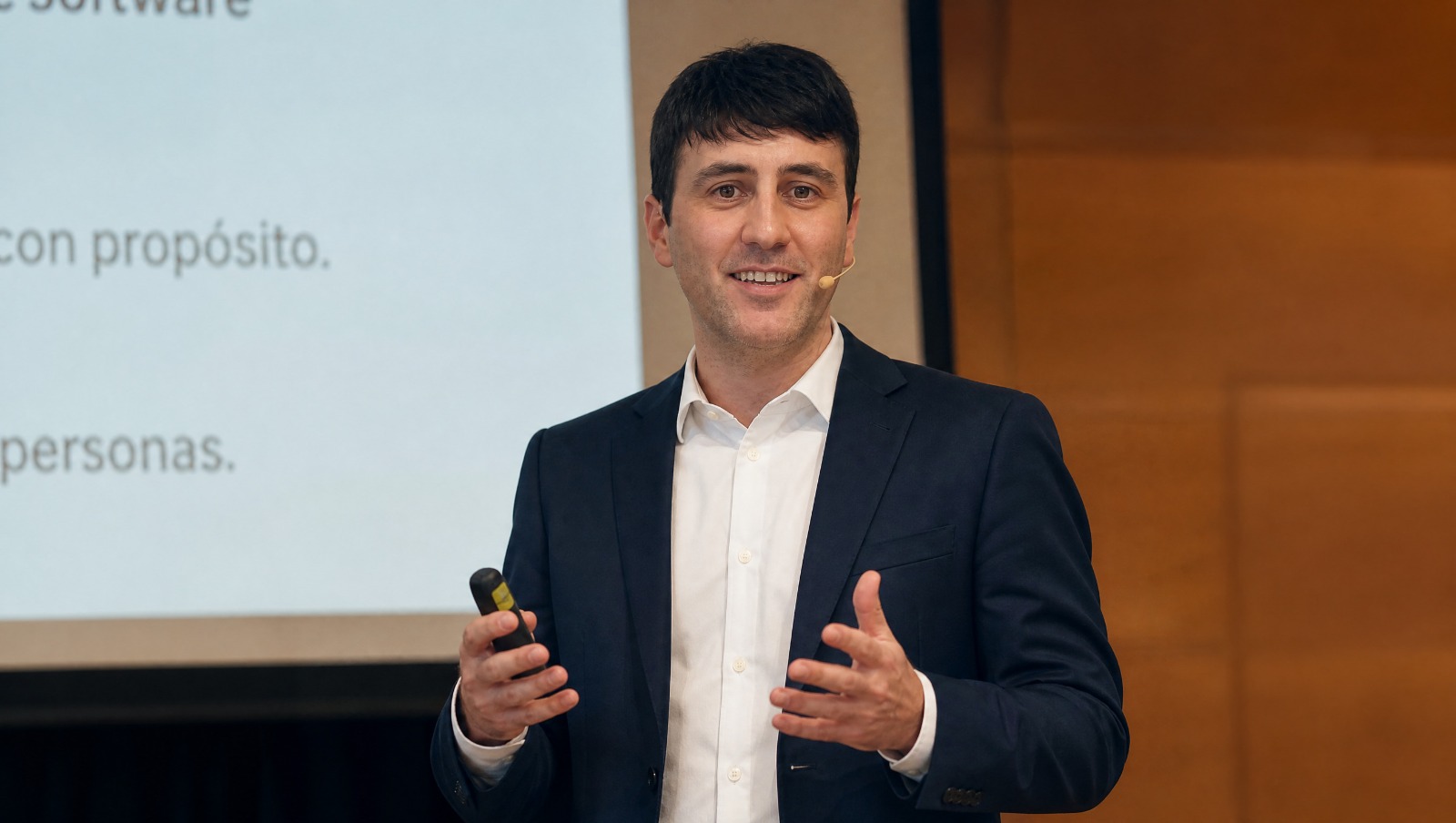
I've written a lot about Yeray on this blog. He's never had the right of reply.
So I sent him eight questions and asked him to answer as if I weren't going to read it. I did read it, obviously. Here it is.
At 14 we were organising events for around 3,000 people. What do you remember, and who did what?
Mostly that we didn't sleep. We were kids running something adults would have needed a whole team for. You were the one obsessed with making everything work better: the lists, the tickets, the systems. I was more on the people side, talking, convincing, putting out fires at the door. The funny thing is that the split hasn't changed much in twenty years.
In 2012, when we wanted to sell websites, you asked whether we could sell without having a website of our own. What did you think back then? And now?
I still think it was the right question. Everyone told us you needed a nice website before selling websites. I thought: if someone buys from us, it'll be because of us, not because of our homepage.
Now I'd add something. The question wasn't really about the website. It was about not hiding behind preparation. There's always one more thing to have ready before you start.
What's the hardest part of being partners with a friend for more than twenty years?
Saying the uncomfortable thing at the right moment. With a stranger you'd send an email and be done. With a friend you think about it three times, because you don't want to break what's outside work.
Keeping quiet is more expensive. The thing you don't say comes back later, and bigger.
It took us years to learn that.
Tell me about a time you had to stop me.
There are plenty. You get excited at night. You send a message at an hour when nobody should be thinking about servers, with a plan to rebuild half the company. My rule is simple: I read it in the morning, and if it still makes sense in daylight, we do it. Many times it does. Sometimes it doesn't, and you're the first to admit it.
How do we split the work and the decisions?
Big decisions, always the two of us. The rest goes to whoever knows more. You're more product and technical. I'm more the day-to-day with clients, the numbers and the paperwork nobody sees.
When we disagree we don't vote, because with two people voting doesn't work. We talk until one convinces the other, or until we both realise it wasn't that important.
One Foxnice decision you're proud of, and one you wouldn't repeat.
Proud: we've never taken money from anyone. We started with 300 euros and every step since has been paid for by clients. It's slower, but nobody tells us what to do.
Wouldn't repeat: saying yes to everything for so long. For years we sold whatever someone asked for. It kept the lights on, but it spread us thin. When we decided to stop doing custom development inside maintenance, I felt relief more than fear.
What would you tell someone about to start a company with their best friend?
Write down how you'll split things before there's anything to split. And accept that you'll argue. Arguing isn't the problem. The problem is when one of the two stops arguing because he's given up.
Where do you see Foxnice in ten years?
Smaller than people would expect and freer than now. Fewer, better clients. Products that work without us being on top of them every day. And the two of us still deciding things together, hopefully from wherever we want to be.
Twenty years, and he still answers in fewer words than I do.
That's probably why it works.